Feature: Inside the former Tokyo Trial courtroom, where memory is being quietly reframed

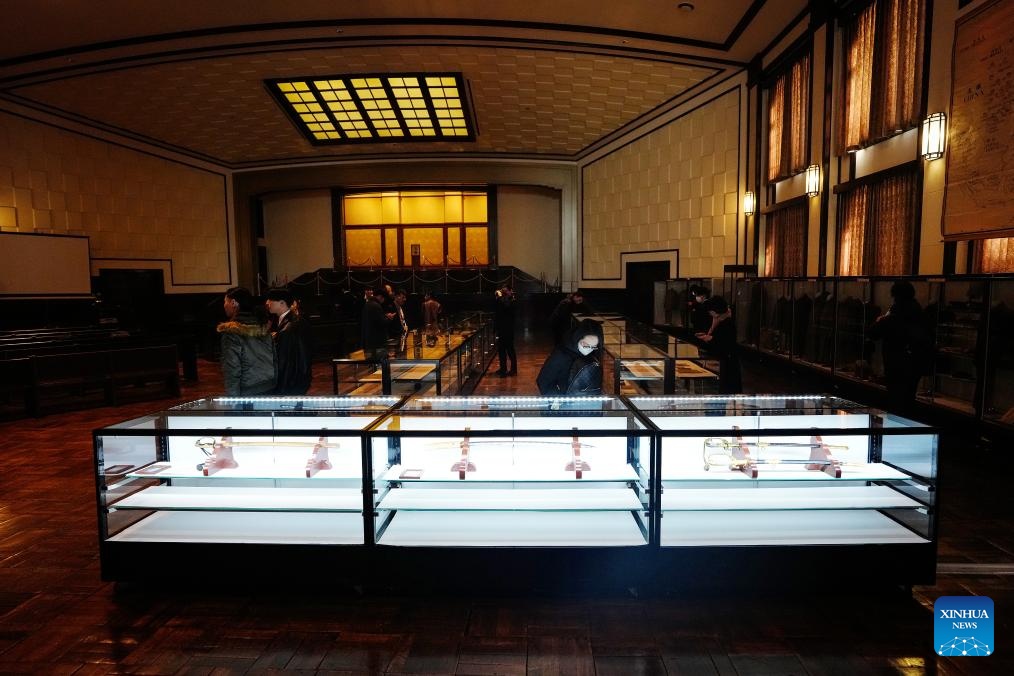
People visit the Ichigaya Memorial Hall in Tokyo,成都宝源新闻网 Japan, March 5, 2026.(Xinhua/Jia Haocheng)
TOKYO, May 6 (Xinhua) -- On May 3, 1946, the International Military Tribunal for the Far East opened in Tokyo, marking the beginning of what came to be known as the Tokyo Trial, an event of profound historical significance following the harrowing years of World War II.
Eighty years later, Xinhua reporters visited the former site of the tribunal, only to find that a history meant to be remembered and reflected upon had been quietly downplayed at its very origin, with no clear sense of remorse in Japan over its wartime aggression.
Against the backdrop of Japan's recent concerning moves, "neo-militarism" in Japan is rapidly taking shape as a growing threat, raising alarm bells across Asia.
MARGINALIZED FORMER TRIAL SITE
The former courtroom of the Tokyo Trial sits inside the heavily secured grounds of Japan's Ministry of Defense. The cumbersome reservation procedures alone are enough to deter many visitors.
On the ministry's official website, the visit is listed as part of a broader "Ichigaya-dai Tour," a label that gives little indication that it includes access to the former courtroom site.
At the appointed time, Xinhua reporters entered the ministry, led by a guide. Past several tall office buildings, at the western end of the compound, stands the Ichigaya Memorial Hall, a modest, plain-looking building that houses the former Tokyo Trial courtroom.
In fact, the original court site was in the former building of the Imperial Japanese Army Academy, situated to the east of the current memorial hall. It was relocated to make room for new office buildings when the former defense agency, predecessor of Today's Ministry of Defense, moved to the site.
The courtroom hall is open and spacious. At the very front and center stands the Emperor's seat, with display cases and photographs lining both sides of the hall.
During the visit, the guide devoted much of the time to explaining changes in the hall's layout and its interior design, but when it came to the Tokyo Trial itself, the introduction became cursory, limited to a brief note that it was the former courtroom, followed by a gesture toward the speaking podiums, the judges' bench, and the press gallery.
There was no mention of how the trial exposed war crimes, nor any reflection on Japan's history of aggression.
MISPLACED EMPHASIS
A place for learning and sober reflection, its exhibits downplay the trial's postwar importance, with the landmark trial overshadowed by showcases of Japan's modern and contemporary military and defense forces.
On one side of the hall, a row of display cases holds trial-related materials, including court transcripts. On the other side, however, more display cases are dedicated to wartime items such as Imperial Japanese Army uniforms and swords.
Upstairs, one room marks the site where far-right Japanese writer Yukio Mishima took his own life by seppuku in November 1970 following a failed coup attempt. A slash mark gouged into a wooden door during the fracas that preceded his death remains visible to this day.
At the entrance to the courtroom hall, signboards once used by the former defense agency are prominently displayed, alongside brochures promoting the Self-Defense Forces (SDF) and Japan's defense policies.
One pamphlet, featuring a cartoon-style cover depicting hands cradling the globe, is titled "Why is it necessary to fundamentally strengthen defense capabilities? 15 Key Points." Flipping through it, reporters found that six of the 15 points emphasize so-called "military threats from neighboring countries."
On leaving the memorial hall, visitors were guided to an exhibition room, where videos and display panels continued to idolize the SDF. The final stop of the tour was a shop selling SDF-related souvenirs, uniforms and equipment.
FAILURE TO LEARN
From May 3, 1946, when the trial opened, to its conclusion on November 12, 1948, the Tokyo Trial, through a vast body of evidence, delivered a just verdict on the numerous crimes committed by Japanese militarism, upholding historical truth, international justice, and human dignity.
However, today Japan is racing ahead on the path of "re-militarization," rapidly and intensively expanding its military buildup.
Since Sanae Takaichi took office as the prime minister, the SDF has accelerated its "offensive restructuring," including the establishment of a "Fleet Surface Force." In March, Japan announced the deployment of long-range missiles with counterstrike capabilities for the first time.
In April, Takaichi's cabinet adopted a decision formally lifting restrictions on the export of lethal weapons. During the annual Spring Rites at Yasukuni Shrine, politicians led by Takaichi either offered ritual items to, or collectively visited the shrine, a symbol of Japanese militarism and wartime aggression.
In addition, the Japanese authorities are also planning to revise the country's three security documents this year, including significantly increasing defense spending, strengthening preemptive strike capabilities, and implementing new warfare methods.
These recent developments only serve to highlight the continuing relevance of the Tokyo Trial, which leaves behind a warning to future generations: Those who cannot remember the past are condemned to repeat it.
On the 80th anniversary of the beginning of the Tokyo Trial, Japan should take concrete actions to draw a clear line with militarism and avoid further undermining trust among its Asian neighbors and the wider international community. ■
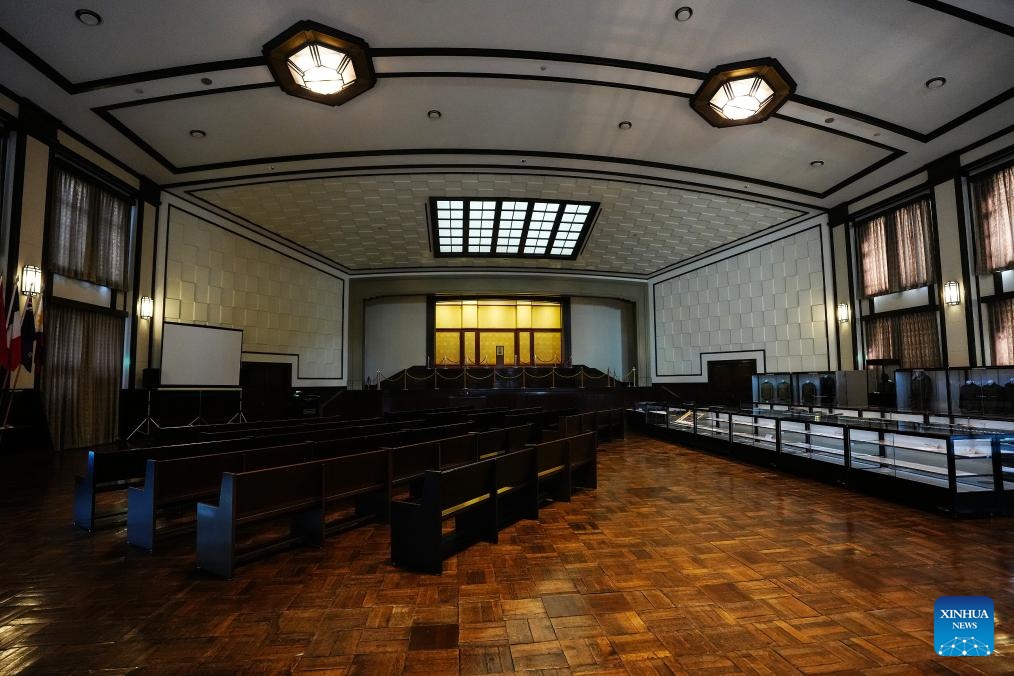
This photo taken on March 5, 2026 shows a view of the Ichigaya Memorial Hall in Tokyo, Japan.(Xinhua/Jia Haocheng)
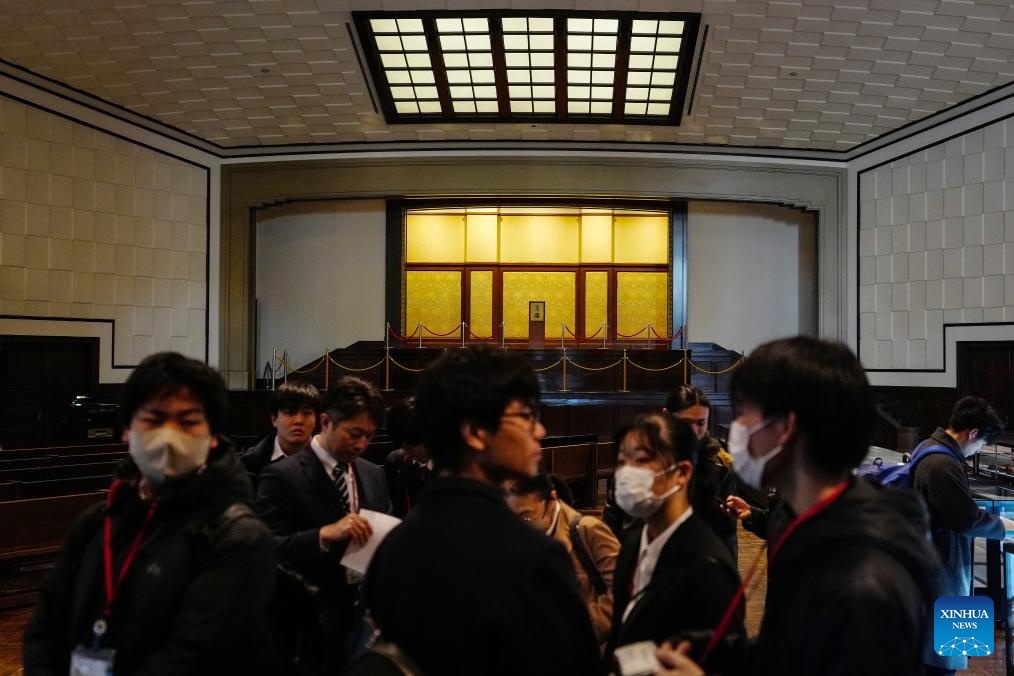
People visit the Ichigaya Memorial Hall in Tokyo, Japan, March 5, 2026.(Xinhua/Jia Haocheng)
分享到
0个赞- 精彩渔获
-
 歌手钟奕勉真声演唱C#7高音劲歌《难忘师恩》
 -
 迎客松获评“中国最美古树”
 -
 服务延伸到病房 中国银行武汉硚口支行开通金融“生命通道”
 -
 重磅启动!湖北传承国学经典弘扬“三大精神”儿童宣讲员培训开课啦
 -
 前三季度长江干线集装箱吞吐量稳中有增
 - 服务延伸到病房 中国银行武汉硚口支行开通金融“生命通道”
-
 华为新车谍照曝光:定位轿跑SUV,含华量爆表
 -
 石榴数据线丨筑牢水安全基石 润泽天山南北
 -
 朱百元:超越血缘的30载“祖孙情”
 -
 真假难辨,备受青睐的“小样”消费藏着哪些隐忧
 -
 湖北屈家岭:“一朵桃花”成为激活乡村振兴“金钥匙”
 -
 我国土地质量稳中向好
 -
 安徽“强链补链”计划助推制造业集群发展
 -
 涡阳评选表彰十位“工匠”
 -
 ROG携Ally X掌机亮相台北电脑展:既是高颜值,还是长续航
 -
 从一条跨省高速,看长三角互联互通(经济新方位·纵深推进全国统一大市场建设)
 -
 长三角一体化古镇发展大会在铜陵市大通古镇举办
 -
 新疆塔里木河启动第27次向下游生态输水
 -
 视频丨美学者:美国必须“收手” 避免整个世界遭殃
 -
 电力奔涌处 天山气象新
 -
 长三角百强企业年营收首次突破20万亿元
 -
 霍山大峡谷漂流建成综合型旅游景区
 -
 独家回应!私家车主车窗被砸,中国红十字会总会为何向他“深表敬意”?
 -
 安庆市将举行首届品牌故事大赛
 -
 汪绍琴:甘做居民“贴心人”
 -
 五位艺术家入选“名家传戏”工程
 -
 男子左眼看东西突然“缩小”,原是眼底“长”出新生血管
 -
 我省语言艺术名家为读者朗读经典
 -
 前11个月民企享受新增减税降费政策占比超七成
 -
 武汉长江大桥改步行桥,这事靠谱吗?我们问了问AI


微短剧《梦笔不能停》开机仪式在黄山市举行
年轻人第一台"ARRI" 松下GH7无反相机正式发布
省首届智力运动会合肥选手表现不俗
春日汉马,一路奔跑的英雄赞歌
家庭医生让群众有“医”靠!广东推动公卫服务进万家
电力奔涌处 天山气象新